1. Arrival in Lyss: A Breath of Fresh Air
A crisp breeze greeted me as I stepped off the train at the Lyss railway station. The small town, nestled in the canton of Bern, immediately felt like a sanctuary of stillness compared to the hurried rhythms of urban life. The clean, pine-scented air, the gentle hum of birdsong, and the soft light filtering through scattered clouds painted a quiet yet compelling welcome.
The town itself appeared compact, with its low buildings, clean streets, and the soft clatter of bicycles in the distance. From the station, it was only a short walk to the starting point of the nature route that had brought me here: a looped trail that led through the forests, across streams, and along the Aare riverbanks. I had read about this trail from a local municipal publication, and the idea of immersing myself in such varied terrain over just a few hours held an undeniable allure.
2. Entering the Forest: Whispering Pines and Shifting Light
Within ten minutes of walking, the edges of civilization melted behind me. A dirt trail, wide enough for two but clearly designed with hikers in mind, invited me into the woods. Tall pine trees lined the path on either side, their trunks straight and resolute, pointing skyward like the columns of a natural cathedral. Underfoot, soft moss cushioned each step, and the light under the canopy dappled everything in golden flecks.
The silence here had depth. Not an emptiness, but a textured quiet that allowed the rustling of small animals, the creaking of trees, and the murmur of distant water to surface gently. I stopped several times just to listen. At one point, a red squirrel darted across the trail and disappeared up a trunk with a rustle so swift and skilled, it seemed rehearsed.
Wooden wayposts marked the trail clearly. The path I followed was known locally as the “Lyss Naturpfad,” a nature loop that begins near the Lyssbach and weaves through several habitats: forest, meadow, wetland, and riverbank. Most of the route was well-maintained gravel or packed earth, but in wetter sections, small wooden footbridges offered dry passage. Each shift in terrain brought with it a change in scent and texture—sometimes earthy and damp, other times dry with the faint sweetness of wildflowers.
3. Lyssbach Creek: Water in Motion
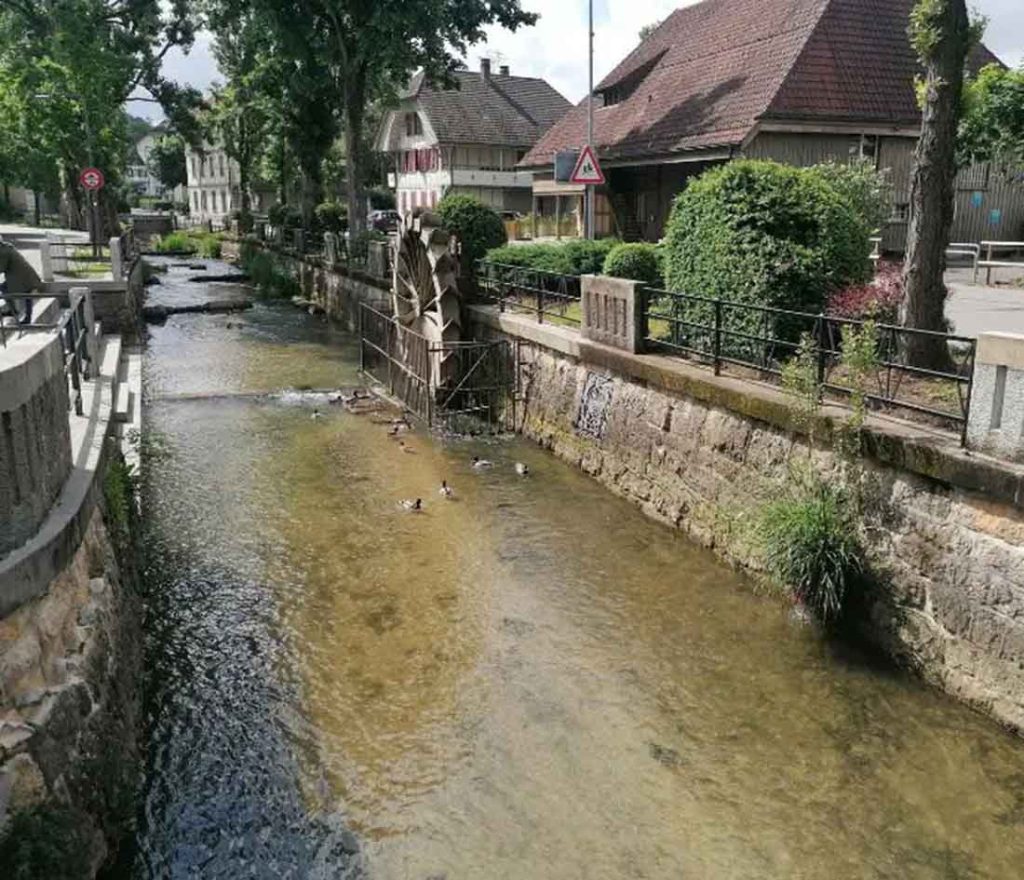
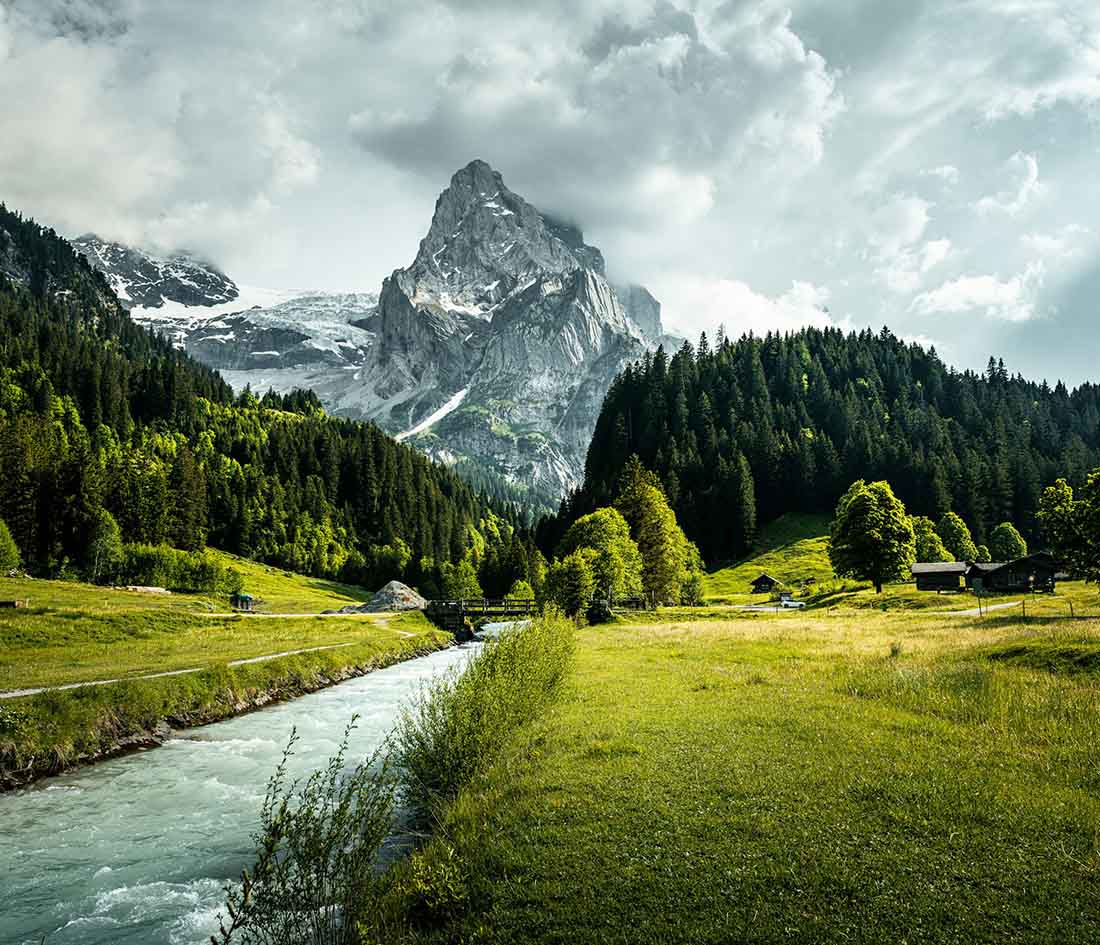
The sound of running water grew louder until the Lyssbach appeared beside the path, tumbling over smooth stones and curving gracefully through the undergrowth. I followed its meanders, watching how the water turned bronze where leaves drifted overhead, and clear where the sun touched it directly.
The banks of the Lyssbach were lined with alder and willow. Their roots clung to the soil like fingers, some exposed and tangled. Dragonflies hovered in the shafts of sunlight, and a pair of ducks paddled silently beneath an overhanging branch.
I paused at a wooden bench placed thoughtfully beside a bend in the creek. The bench, aged but solid, bore a plaque with an engraving in German: “Hier ruht der Tag” — “Here the day rests.” That phrase lingered in my mind for several minutes, echoing the sensation of time slowing to a gentle crawl. I sat, watched the water move, and let myself be still.
4. Meadows in Bloom: Wildflowers and Open Sky
Exiting the forest briefly, the trail opened into a wide meadow bordered by scattered trees. The contrast between the shaded woods and this open field was dramatic. Here, sunlight poured freely, and a soft wind rippled across the grasses like a brushstroke. The meadow was alive with color: yellow dandelions, purple clover, and clusters of white yarrow swayed together in rhythm with the breeze.
Insects buzzed industriously. A butterfly with orange wings danced from bloom to bloom, completely absorbed in its task. Swallows swooped in arcs overhead, their bodies catching the light in quick flashes.
A small wooden sign informed me this section of the path was part of a pollinator conservation initiative. Several square meters of the field had been left untouched by mowing, encouraging biodiversity. Small mounds of earth marked the nests of wild bees, and low fences protected sensitive ground cover.
Further on, a hand-painted map nailed to a post pointed toward a small observation deck. From that slightly elevated wooden platform, the meadow stretched out in all directions, bordered on the far end by a wall of pine that marked the forest’s continuation. The platform had a logbook tucked into a waterproof box, and flipping through its pages revealed sketches, poems, and observations from past walkers. One entry simply read, “Waves of grass and time.”
5. Marshland Trail: Reeds and Silence
The trail reentered the woods, curving toward the marshy terrain near the Lyss wetlands. A cooler, damper air took hold. The path turned softer here, springy underfoot with accumulated moisture. Reeds began to appear in dense clusters, some taller than me, their green stalks swaying with a hushed rustle.
Frogs croaked unseen, and birds nested in the reeds, their calls sharper and more varied than those in the forest. I passed a wooden blind—an unobtrusive viewing shelter with slits for birdwatchers. Inside, a laminated guide identified local species: the reed warbler, the marsh harrier, and the common snipe.
I stayed still inside the shelter for several minutes. Patience was rewarded with a glimpse of a heron as it glided low over the water, landed in the shallows, and stood motionless. Its gray plumage blended almost perfectly with the landscape until it moved its neck in a slow, elegant curve to dip into the water.
Outside the blind, the path narrowed and turned slightly uphill, skirting the edge of a large marsh pond. The sun, though still bright, had shifted slightly, casting a golden angle of light across the reeds. The reflection on the water made the surface seem like a mirror of sky and grass.
6. Aare River Path: Stones and Flow
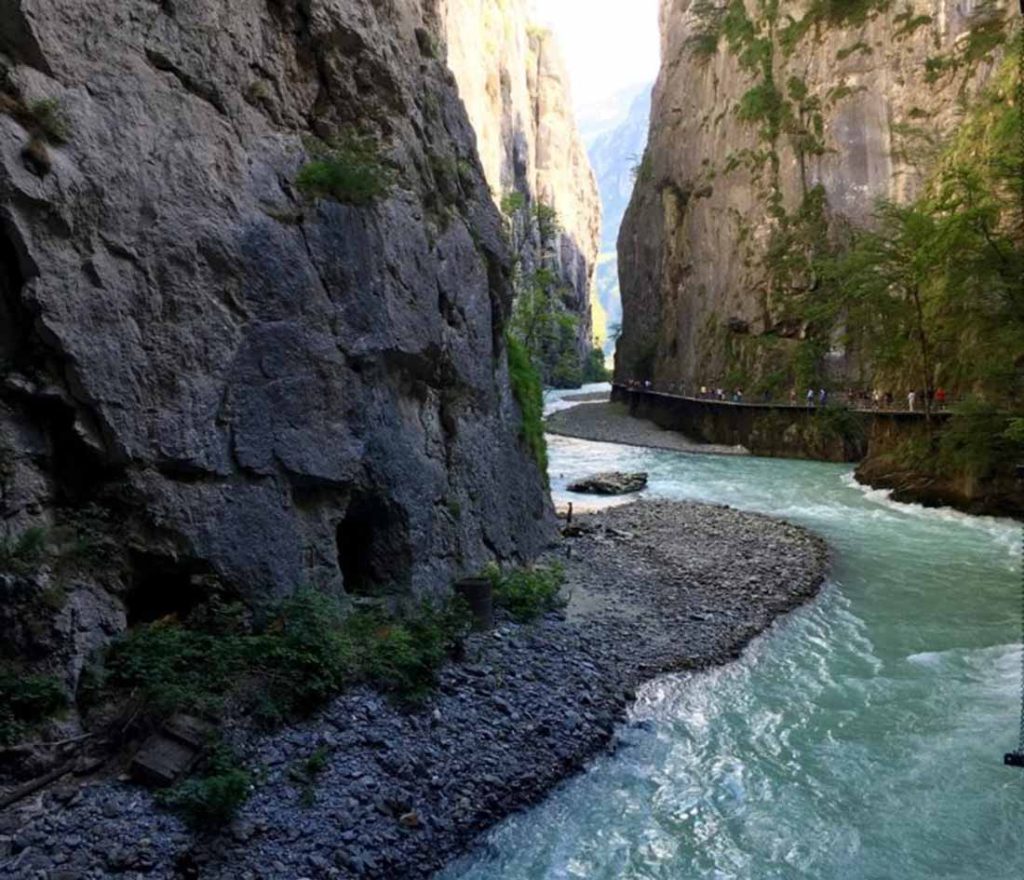
Eventually, the trail joined the Aare river. The change was immediate. Where the Lyssbach had been intimate and shaded, the Aare was wide and majestic. The river moved swiftly but with grace, its surface broken occasionally by white foam where it curled around submerged rocks.
Smooth stones lined the banks, and occasional outcroppings invited walkers to sit. I walked down to one of these flat stones and took off my boots, letting my feet dip into the cool water. The sensation was electrifying: cold, clean, and revitalizing. A couple of kayakers passed, waving cheerfully, their paddles slicing rhythmically through the water.
To my right, the river was bordered by dense alder stands. To my left, open grassland stretched toward the town’s distant edges. Every so often, a gravel path split off toward a farm or a residential lane, but the main trail stayed close to the water, tracing its sinuous path.
A few kilometers upriver, a small wooden bridge crossed a narrow fork in the water. The structure was plain and beautiful—just beams, pegs, and time-worn planks. I crossed slowly, each footstep echoing slightly on the hollow boards, and looked down to see trout darting beneath me.
7. Into the Hills: A Moment of Elevation
The final portion of the loop led uphill into a lightly wooded slope. The climb was modest but steady, and the view that opened at the top was sweeping. From this elevation, Lyss spread out in miniature—rooftops, fields, and the ribbon of the Aare threading through it all. Beyond the town, distant peaks hinted at the Bernese Alps.
Up here, the air was especially pure. I sat against a sun-warmed rock and watched the landscape in silence. A kestrel hovered motionless in the sky before diving into the meadow below. Far off, church bells rang the hour.
The trail began to curve gently downward again, leading through a mixed forest of ash and spruce. The shade was deep and calming. Tree roots crossed the path like ancient veins, and occasional moss-covered stones added texture underfoot.
8. Return to Lyss: Familiar Streets with New Eyes
Emerging from the forest onto the edge of town, the transition back into civilization was both gradual and striking. The same streets I had seen earlier now seemed quieter, the buildings somehow smaller, as if the vastness of nature had expanded my sense of scale.
I walked past tidy gardens, heard the faint clink of silverware from open windows, and saw a child chasing a ball down a narrow lane. The town exhaled a kind of peace, and the natural world I’d just walked through seemed to echo in every tree that lined the street.
There were no grand vistas or extreme altitudes on this trail—just a perfectly paced invitation to be present. Each segment of the walk told a different story: the murmur of a creek, the stillness of a pond, the movement of wind through grass, and the ceaseless flow of the Aare. Everything moved and everything was still, in perfect balance.
No signs had shouted their importance, no landmarks demanded to be photographed. And yet, in that quiet, the trail offered a profound connection—a thread from footstep to earth, from breath to breeze, from moment to landscape.